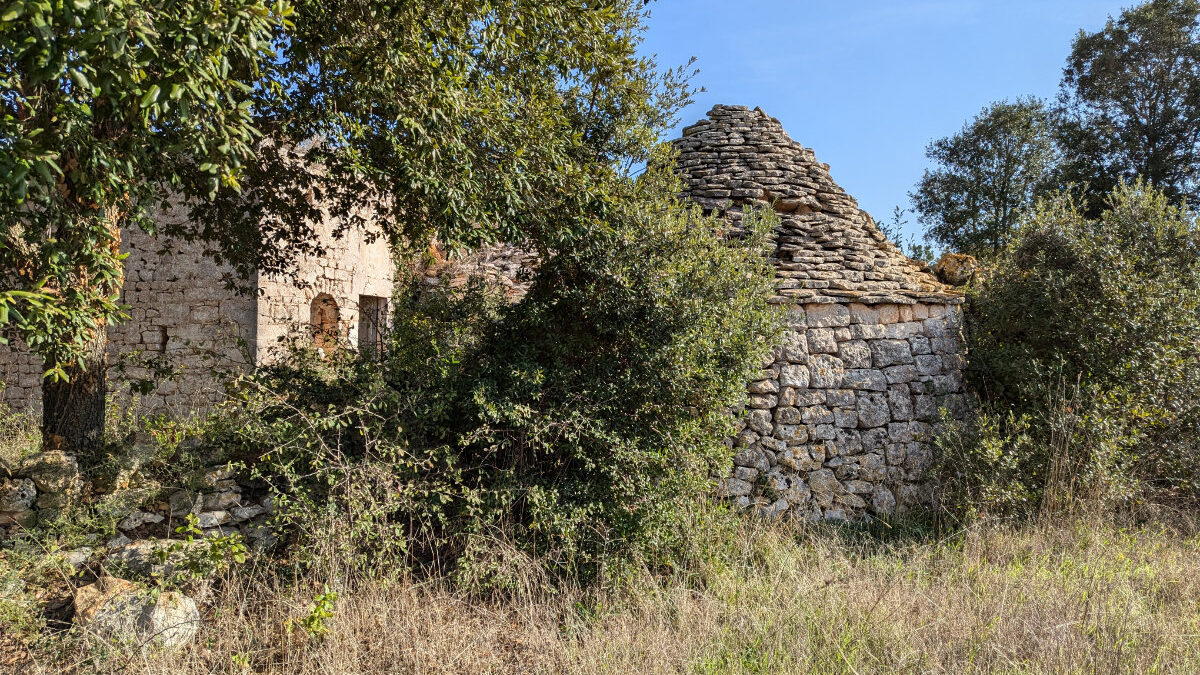
On a golden October morning, we discover the property. The hay for next year’s harvest has just been sown, and the ochre of the bare earth contrasts with the bright green of the surrounding vegetation, revived by the cool of autumn after a scorching summer.
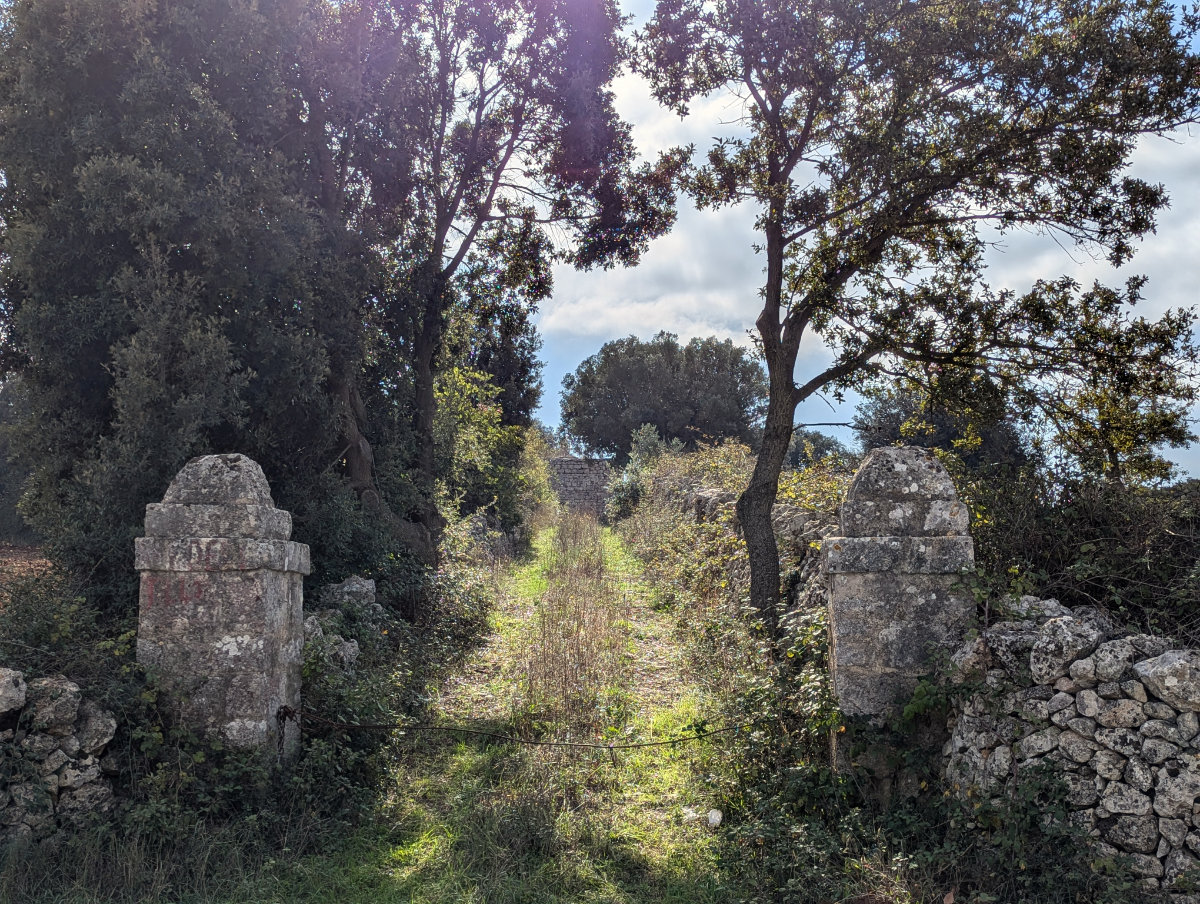
Following the road that borders the land, enclosed by a dry-stone wall overgrown with brambles and dense vegetation, we arrive at two stone pillars standing proudly at the entrance to the property.
From there, a path half-reclaimed by grass leads to what appears to be a dry-stone lamia.
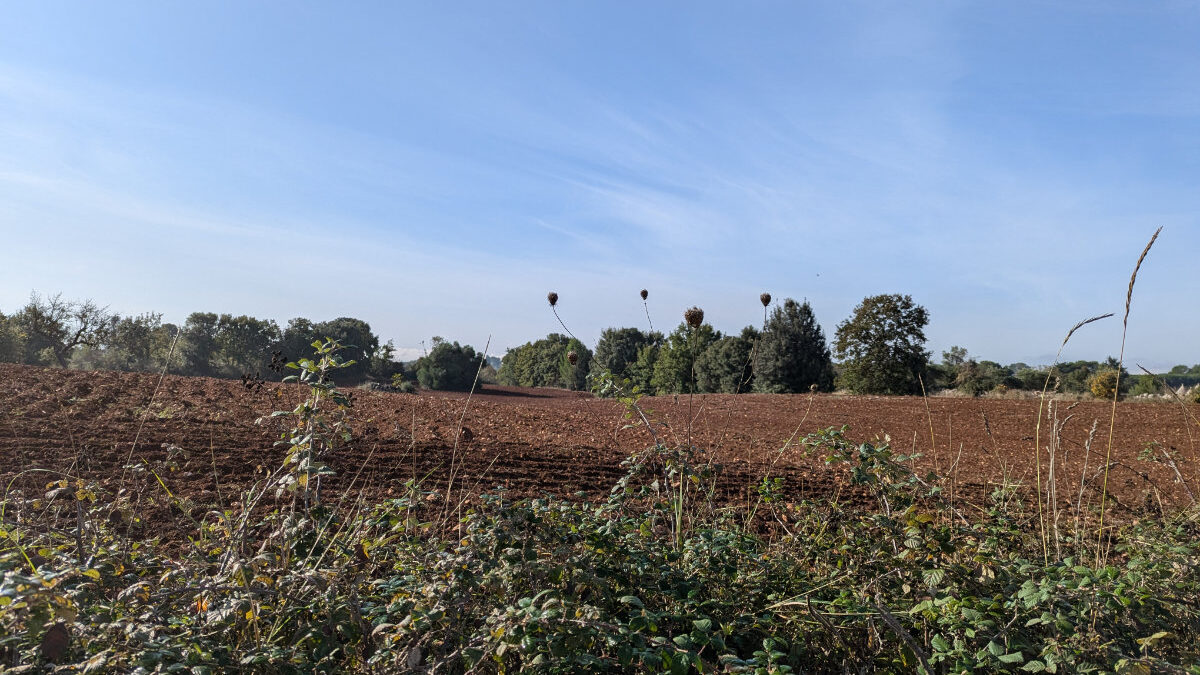
We walk between the ochres of the earth and the revived greens of autumn, beneath an azure sky. The path, slowly reclaimed by nature, leads into a silence alive with rustling. Little by little, the stone reveals itself: a lamia, then an ancient trullo embraced by it. A discreet, timeless place, where the past still seems to breathe.
As we move forward, the murmur of nature all around becomes almost tangible, broken only by the rustle of grass beneath our feet and the distant calls of a few birds. Left to grow freely for years, the vegetation forms an almost natural tunnel, heightening the feeling of entering a forgotten, almost secret place.
The lamia, at first seen as a simple mass of ochre-toned stone, gradually reveals its silhouette, its volume, its details. It then appears joined, closely intertwined, with an older trullo, from which a superb round arch stands out, like a silent witness to the farming past of the region.
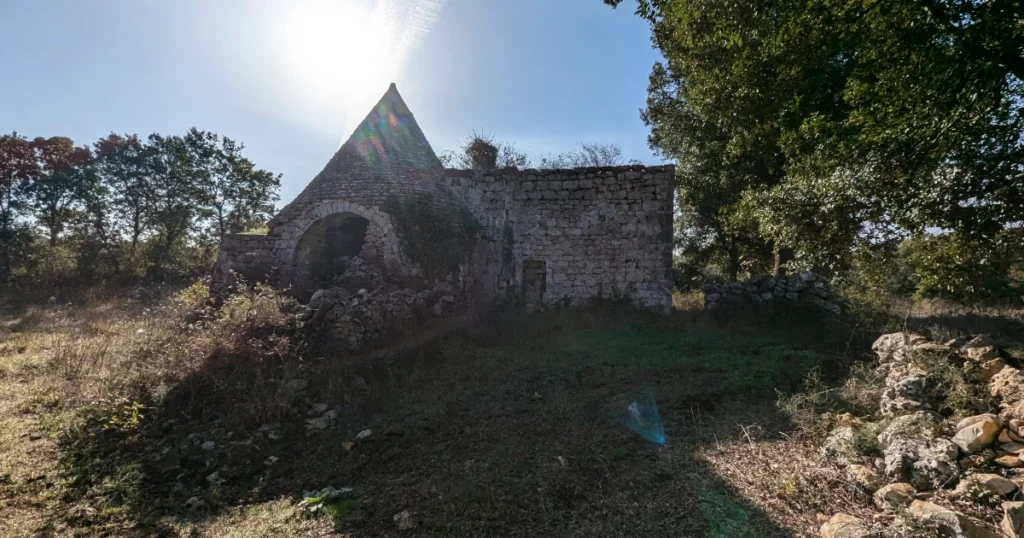
A new chapter of history begins.
Once our feet had trodden this heritage, there was no turning back. Enchanted by the place, we had fallen in love with it, and from that October day on we had only one goal: to bring this magical place back to life and give it a new story.