

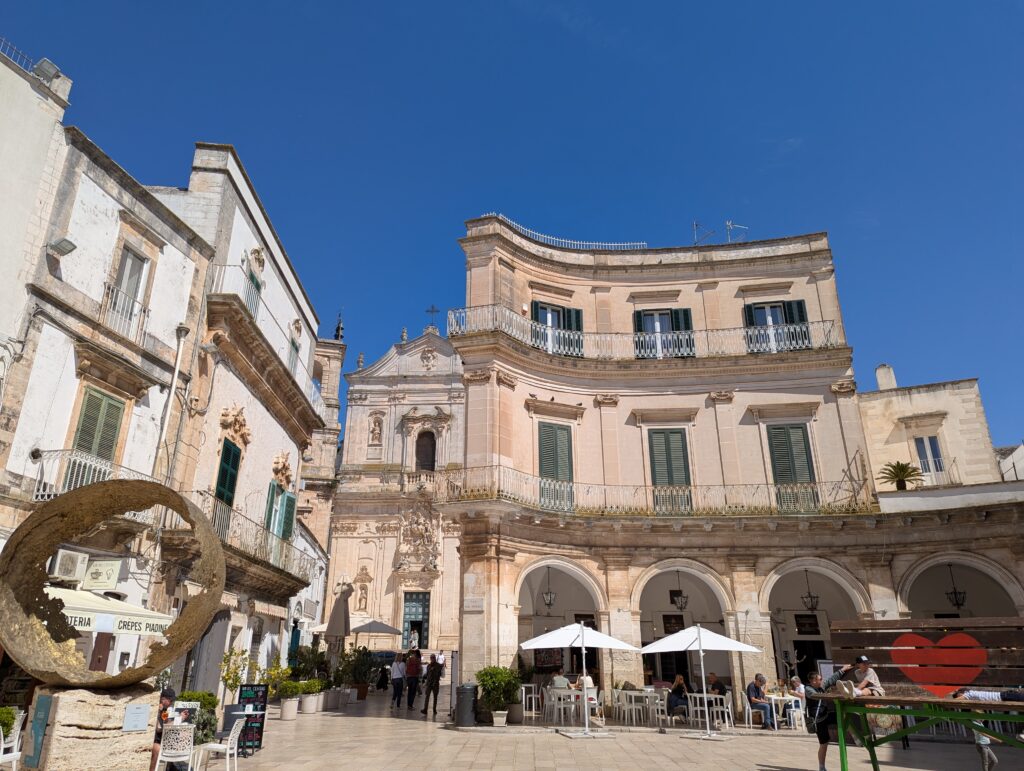
In 1507 it became a fief of the Caracciolo family, who made it one of the capitals of Apulian baroque. The 18th century marked the town’s golden age, a period in which economic growth led to an exceptional flowering of art and culture. In 1668, Duke Petracone V Caracciolo had the Ducal Palace built (the work of Giovanni Andrea Carducci of Bergamo), a building reminiscent of the sumptuous palaces of Rome. The Ducal Palace houses the famous frescoes by Domenico Carella, which cover three entire rooms and are true masterpieces of Apulian baroque art.
Martina Franca was founded in the 10th century by people from Taranto fleeing Saracen raids, who took refuge inland on Mount San Martino – hence the name “Martina”. In the 14th century, the Prince of Taranto granted the town tax privileges. These “franchigie”, or privileges, gave rise to the name Martina Franca. This defensive origin explains the town’s strategic position in the Itria Valley, perched 400 metres above sea level on the last hills of the south-eastern Murge.
Today, Martina Franca shines far beyond its architectural heritage. For half a century, summer in Martina Franca has been marked by the Festival della Valle d’Itria, an internationally renowned cultural event held between July and August. The town is also famous for its culinary specialities, above all capocollo di Martina Franca, a traditional cured pork naturally smoked in trulli using methods handed down through generations. Visitors can also enjoy orecchiette, focaccia and taralli, paired with Primitivo, the region’s emblematic wine – a testament to the culinary richness of Puglia.
Conclusion: Martina Franca, a symbol of preserved identity
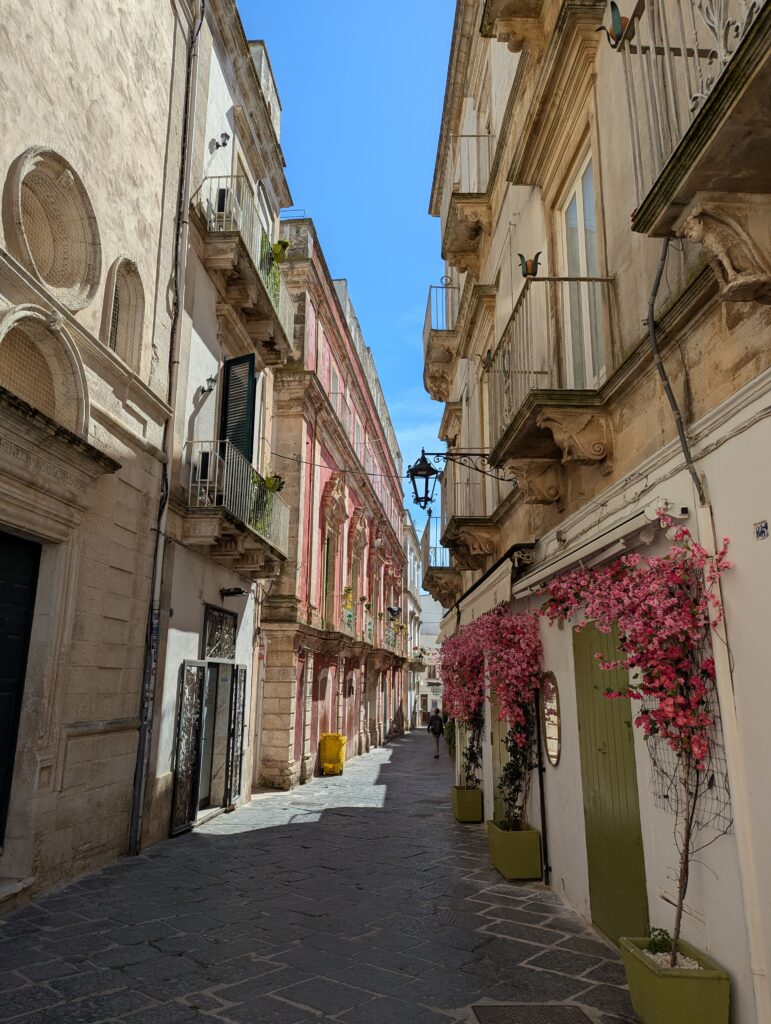
Martina Franca perfectly embodies the rich heritage of the Itria Valley, where the rural legacy of the trulli blends harmoniously with urban baroque refinement. This unique town bears witness to the remarkable ability of Puglia’s communities to preserve their identity while adapting to the course of history. The striking contrast between the simple conical buildings of the surrounding countryside and the ornate palaces of the historic centre reveals the exceptional architectural diversity of the region. Today, Martina Franca still shines culturally through its international festival and its culinary traditions, carrying on an authentically Mediterranean way of life. This blend of past and present makes Martina Franca a living laboratory of Apulian identity – an eloquent symbol of the region’s ability to turn its ancestral heritage into a contemporary asset, offering visitors a unique experience at the heart of the soul of Puglia.